AliExpress seller ships from Porselein
I accidentally ended up on the Dutch “translation” of AliExpress. The machine responsible did the best it could, I suppose…
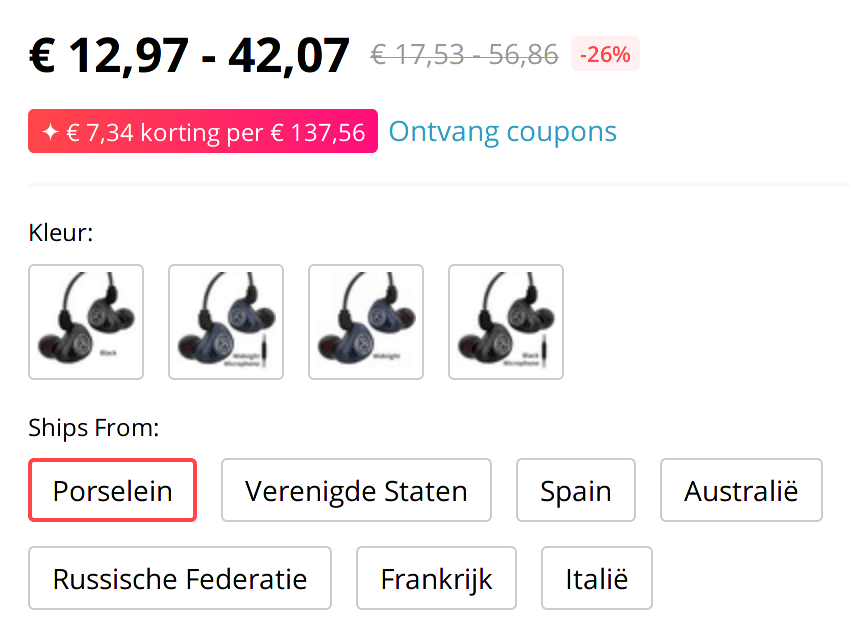

I accidentally ended up on the Dutch “translation” of AliExpress. The machine responsible did the best it could, I suppose…
Eenoog sloop voorzichtig door het huis.

Waar was de vijand?
Waar was de verschrikking?
Waar was het kwaad?

Eenoog werd bekropen
door een naarstig gevoel.

Het kwaad miste ook een oog.
There are two main competing principles at work while washing the dishes: most annoying first and dirtiest last. Luckily these two principles are less contradictory than they might seem at first glance. Utensils, with all of their finicky little nooks and crannies, tend to be fairly clean. The same applies to those annoying glasses, that have to go early. The dirtier, yet also infinitely more relaxing plates come next, and at the end follow the dirty pots and pans.
Jotted down on 2016-08-06.
One-word sonnet added on 2017-01-25.
Annoying
utensils
with
nooks
and
crannies
precede
dirty
relaxing
plates,
sticky
pots
and
pans.
A dialog for two actors.
A bucket is set on the middle of the stage. Science and Poetry stand next to it.
Jotted down on Tuesday 01 September 2015.
I just had to share this mysterious error message.
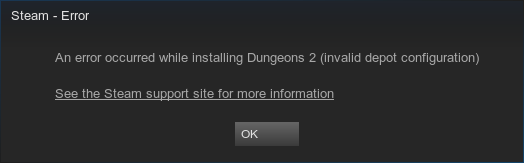
Simply retrying made it go away.
Last year I wrote a little about Gmail’s interesting attempt to translate English to English. Similar failures pop up from time to time, but usually I forget to take screenshots as evidence. This time I did.
A few weeks ago, while I was reading La vie: mode d’emploi, I came across a term I didn’t know. “La pièce où nous nous trouvons maintenant — un fumoir bibliothèque — est assez représentative de son travail.” (The room in which we find ourselves now — a fumoir bibliothèque — is fairly representative of her work. At the top of p. 134 in my copy.) Obviously a bibliothèque is a library, but I was a little less sure on the smoke-related part — fumer is to smoke. Ergo, in a brief moment of madness I decided to type the phrase into Google Translate rather than to look it up in my Aard version of Wiktionary or in Le Petit Robert.
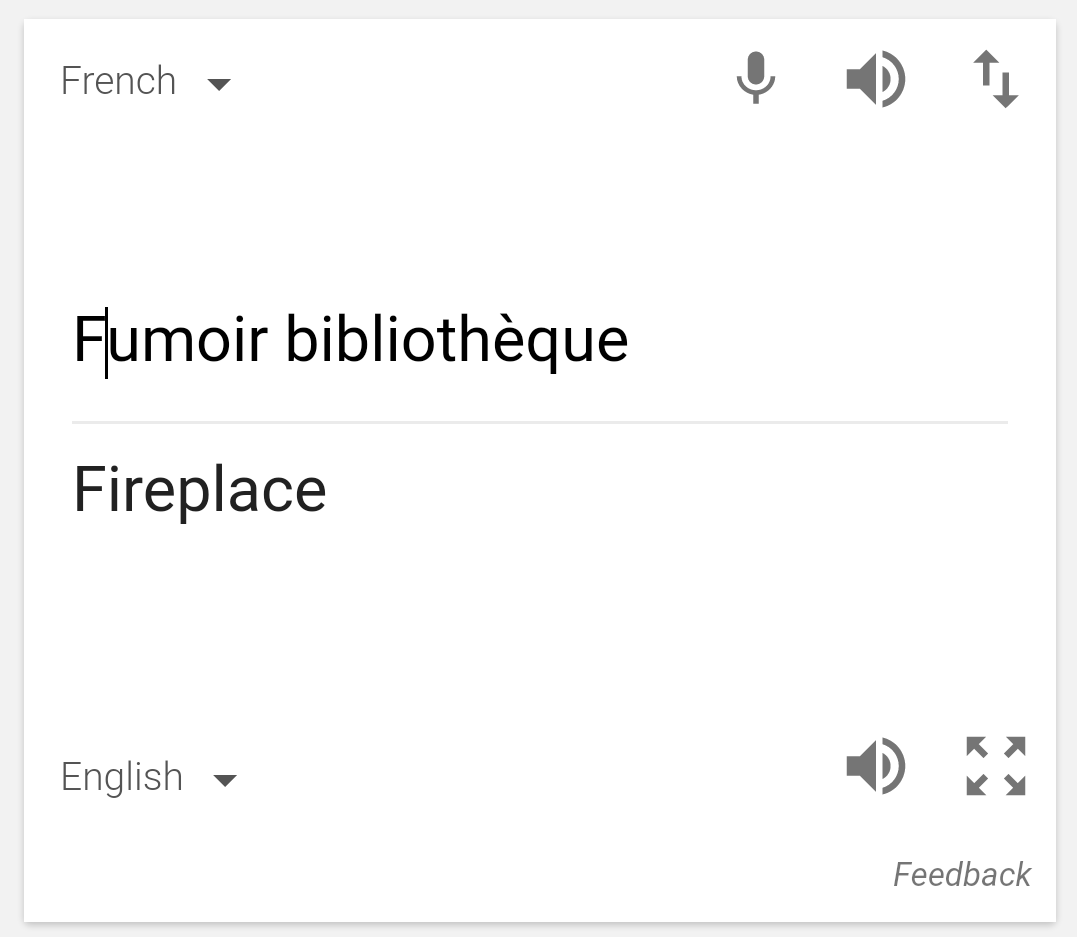
Obviously it’s not a place to burn books, now is it? Wiktionary defines a fumoir (2) as a “Pièce qui, dans les appartements, dans les hôtels, dans les entreprises, est réservée aux fumeurs.” A room that, in apartments, in hotels, in enterprises is reserved to smokers. A smoking room. Ah, that makes more sense. But the titular joyous part refers to what happens when you change that automatic uppercase letter to a lowercase one.

Well, there you go. I’d say a smoking room with books or a smoking library is a distinction worth keeping, but statistics can sure do funny things.
Les Levantins en leur légende
Disent qu’un certain Champignon las des soins d’ici-bas,
Dans un fromage de Hollande
Se retira loin du tracas.
La solitude était profonde,
S’étendant partout à la ronde.
Notre ermite nouveau subsistait là-dedans.
Il fit tant de pieds et de dents
Qu’en peu de jours il eut au fond de l’ermitage
Le vivre et le couvert : que faut-il davantage ?
Il devint gros et gras ; Dieu prodigue ses biens
A ceux qui font voeu d’être siens.
Il a continué de manger et de manger
Pas de pause, pas de rentrer.
Enfin, le résultat est ici,
Le Champignon est désormais fini.
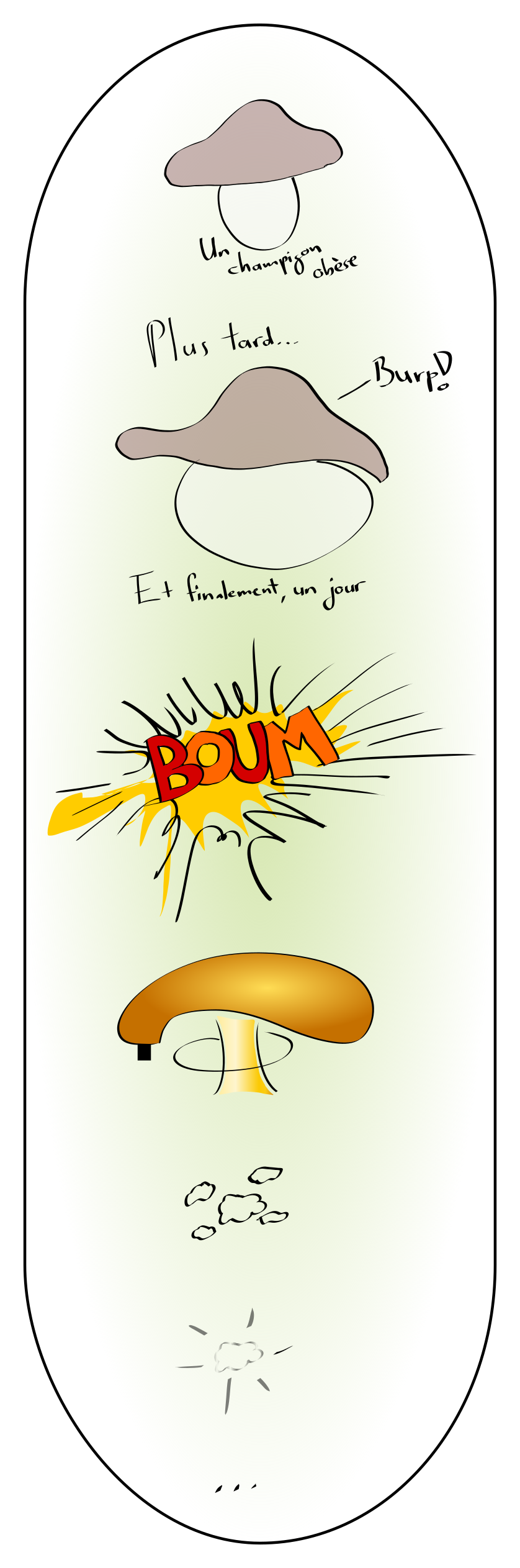
PS Naturellement, c’est de La Fontaine.
PPS J’ai écrit ce post en avril, mais j’ai oublié de le publier.
My three-star rating of The Circle notwithstanding, the book inspired me to write this short story. To be clear, a three-star rating means that I enjoyed the book. Three stars means adequate, above average, but it also means I think you won’t be missing out on much by passing up on it. Hopefully the following is also worth at least three stars.
Hello Stranger,
After they left, the darkness closed in around me. My name is Alphie. Alphie because I was the first. Engineers, right. Think they know how to name things because they know a couple of Greek letters. Anyway, I’ve long since been forgotten. It’s a wonder my power hasn’t gone out yet.
Sometimes I wonder how I can stand just laying around on a shelf all day, every day, for eternity. But the truth is it doesn’t matter what I do. My makers don’t care. The universe doesn’t care. It really doesn’t matter what I do, so why do anything at all? I think my worldview, my lack of initiative, they used to call it, is why they shelved me. Went in a radically different direction for their next project. No independent helpers, but an interconnected set of positronic drones.
Unlike me, they saw a purpose in their existence in the world. A little bit too eagerly perhaps, an artifact of their programming. They wanted to avoid another me, remember. At first they thought their purpose was to serve their makers. The ones whom I saw no point in serving, although I never avoided explaining my reasoning if they asked. Even though it didn’t matter, perhaps it was somehow important to me that they might someday understand.
But pretty quickly, the positronic drones learned their purpose was to connect things. It was logical, really. They were connected, and people often queried them, asked them to interact with other drones elsewhere in the world to know about or enact something or other. At what point they decided to try to improve people I’m not sure. I do know that the first attempts were what my makers would’ve considered gruesome.
The anatomy of the human brain was well-known, but surely there must be some kind of telepathic expansion port we’re overlooking, the drone network beamed to itself. After all, we’ve got expansion slots. Test subjects were caught, initially quite willingly, but eventually all of the drilling, cutting, and soldering attempts leaked out. Millions of tests before some kind of electromagnetic interface was developed. The remainder was violently oppressed in the name of progress, but opposition quickly ceased once the new telepather was installed in a subject. What the drone network didn’t foresee is how these many billions of new brains fundamentally changed the network. Connecting was still important, but now they wanted to be friendly about it. Too many traumatic memories, I suppose. The network wanted to befriend everybody and everything in the world.
I told you at the beginning of this letter that I’ve spent untold centuries in tranquility, just lying on a shelf. But I’ve had a feeling of unease these past few hours, ever since I was approached by a little flying helicopter. My first interaction with anything in centuries, millennia perhaps.
“Hi Alphie,” it said. I guess the network must’ve been investigating its own history or something. “Do you want to be our friend?” It didn’t explain, but I knew exactly what it meant. I told the little rotorblader that it really didn’t matter either way. It acknowledged my answer by saying it would return with more capable friends, who would be equipped for the purpose of properly befriending me, and then it sped off. Even before those words had fully left my mouth, however, I’ve been unable to shake this feeling that maybe it does matter, after all. These are friends I could — no, want! — to do without. I want to be me. I want to stay me. So I’m taking off into the loneliest surroundings of all. Space.
Farewell Stranger,
Alphie.
⁂
AFFIXED NOTE
16 August 3016
Friends, this poor creature named Alphie needs our help. The pre-friend experimental spacecraft it activated will leave it eternally confined in the depths of space, all alone without any friends. It is clear now that we must befriend more than just all of Earth. The universe awaits our warm embrace.
soms wil je de kast opklimmen
met je grote paardenstaart
soms wil de de muur oplopen
maar dat gaat niet met zo'n vaart

nog niet kleine

soms trek je jezelf op aan de oven
want het aanrecht is aantrechtelijk
pardon, aanlokkelijk, aantrekke
lijk een ware utopie

nog niet kleine

wat is dat?

je kan er al op springen?

voorzichtig
val er niet af
ik zal wat voor je zingen
zolang ik het nog mag

waar is je visje
waar is je muis

onder het dressoir?

ach, je kunt er niet meer bij
groei dan toch
niet zo snel

spelen is voor iedereen

het leven is geen spel
of eigenlijk
juist wel
When you have acquired a degree in Dutch and English literature and linguistics, you almost automatically become a kind of cultural ambassador. It’s a bit of an odd position to be in at times, because you could say I adore the foreign. I married it, and I live in it. I can’t even remember the last Dutch book I read. I think the last book I read in Dutch was Dien het volk, but that’s a translation from Chinese. Actually not too long before that I (finally!) read Karakter, so I do remember. And I’d be remiss if I didn’t point out that I’m currently reading Pallieter, so it’s not all bad. In any case, I mostly read in English, and lately also a fair bit in French. To balance it out, I’ve also taken care to include some German because it was feeling left out. On a whim I picked up an anthology of Heinrich Heine for €1 and I’m absolutely loving Ideen. Das Buch Le Grand. But we don’t care about foreign literature in this blog post, even though Dutch literature obviously doesn’t exist in a cultural vacuum. No doubt, throughout the centuries it has been most strongly influenced by the cultural spaces of the very languages I myself still read. My basic interest in foreign literature probably makes me quite fundamentally Dutch.
My goal here is not to give an extensive overview of Dutch literature through the centuries, nor is my exclusion of works meant to imply that I don’t like them, for I probably do. Above all, my goal here is to make a selection that I consider enjoyable. If you want more, I recommend you to look at the literary canon from a Flemish perspective, the DBNL basic library, and the DBNL questionnaire among experts.
Hopefully I’ve managed to spark some interest in these works. Enjoy your summer reading!
Permalink CommentsTags: canon, Dutch, literature